Can I Choose My Own Doctor in a Workers’ Compensation Claim in North Carolina?
After a workplace injury, getting medical treatment quickly matters. Both you and your employer want you to heal and get back to work. But acting fast without knowing the rules can put your workers’ compensation claim at risk. One of the most common questions injured workers ask is: can I choose my own doctor in a workers’ comp claim? The short answer is usually no, at least not right away. North Carolina law has specific procedures for selecting a medical provider, and skipping those steps can lead to denied medical bills or a disputed claim. Understanding who controls doctor selection, and when you have options, helps protect both your health and your workers’ compensation benefits.
Collier Law Workers’ Compensation Attorney helps injured workers throughout North Carolina understand these rules before a mistake costs them their claim. Workers’ compensation cases involve strict deadlines and procedures under North Carolina law that are easy to get wrong without guidance. If you were hurt on the job and have questions about medical treatment, approved doctors, or your rights under North Carolina law, schedule a free consultation with our office today.
What Is Workers’ Compensation?
Workers’ compensation is a type of insurance that covers medical care and lost wages for employees injured on the job. Most North Carolina employers with three or more employees are required to carry workers’ compensation insurance. The system is designed to cover injuries and accidents without requiring the employee to prove the employer was at fault.
Workers’ compensation typically covers:
- Falls, slips, and trips at the workplace
- Injuries from machinery or equipment accidents
- Repetitive stress injuries, such as carpal tunnel syndrome
- Back and neck injuries from lifting or overexertion
- Vehicle accidents that occur while performing job duties
- Exposure to harmful chemicals or substances
- Injuries caused by falling objects
- Occupational illnesses that develop over time due to workplace conditions
What Should I Do After a Workplace Injury in North Carolina?
The steps you take right after a work injury can affect the outcome of your claim. Acting quickly and correctly protects both your health and your legal rights.
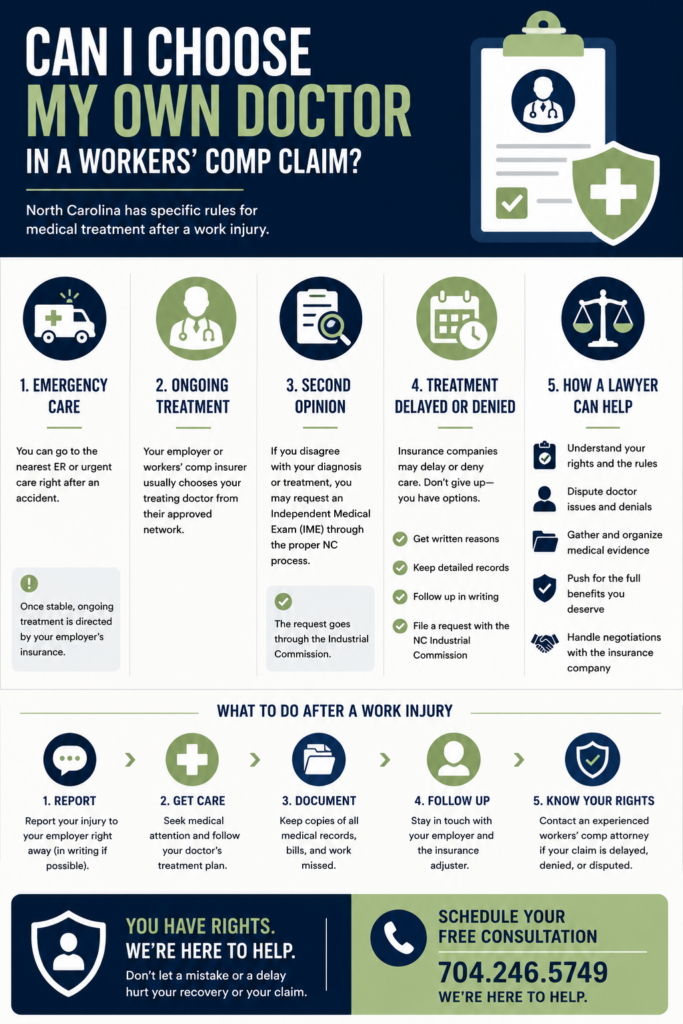
- Report the injury to your employer as soon as possible, ideally in writing
- Seek emergency medical care immediately if the injury is serious or life-threatening
- Ask your employer which doctor or medical provider network you are required to use for non-emergency treatment
- Keep copies of all medical records and documentation related to the injury
- Follow the treatment plan provided by the approved doctor
- Avoid discussing details of the claim with the insurance company without guidance
- Track missed work, medical bills, and any related expenses
- Contact an experienced workers’ compensation attorney if your claim is delayed, denied, or disputed
Who Gets to Choose My Workers’ Comp Doctor?
In North Carolina, the employer or its workers’ comp insurance company generally has the right to choose your treating physician. This is different from your personal doctor or general health insurance, where you typically have freedom to choose your own provider. Under North Carolina law, the employer must direct you to a doctor within their approved medical provider network for treatment related to the work injury.
There is one major exception: emergency medical care. If you need emergency treatment right after an accident, you can go to the nearest emergency room or urgent care facility without pre-approval. Once you are stabilized, however, control of your ongoing medical treatment typically shifts back to the employer’s chosen doctor.
Why Can’t I Choose My Workers’ Compensation Doctor?
Many injured workers are surprised to learn they cannot simply choose their own doctor for a workers’ comp claim. This rule exists because the workers’ compensation system was built around a trade-off. Employees give up the right to sue their employer for negligence, and in exchange, they get access to no-fault medical coverage. Part of that arrangement gives the employer and insurance company the right to direct medical care.
The idea is that this keeps costs predictable for the insurance company and ensures a consistent record of treatment tied to the injury. Insurance companies often argue this also prevents unnecessary or excessive treatment. However, this system can create tension between the injured worker and the workers’ comp insurance company, especially when the employee feels the assigned doctor is not adequately addressing their injury. This is one reason many injured workers choose to work with an experienced workers’ compensation attorney early in the process.
Can I Get a Second Opinion On a Workers’ Compensation Claim?
Yes, in many situations, an injured worker can request a second opinion. If you disagree with a diagnosis, treatment plan, or a determination that you have reached maximum medical improvement, you may be entitled to an independent medical exam. This is sometimes called an IME.
Key points about second opinions and independent medical exams:
- Requests for an independent medical exam typically go through the North Carolina Industrial Commission if the insurance company denies the request
- The second opinion doctor must generally still be part of the approved process, not simply any personal doctor of your choosing
- An independent medical exam can help resolve disputes about the extent of an injury or whether treatment is still necessary
- Getting a second opinion without following proper procedure can create complications with your claim
- An attorney can help file the correct paperwork and represent your interests during this process
What If My Medical Care Is Being Delayed or Denied By Workers’ Comp?
Delays and denials happen more often than injured workers expect. When the workers’ compensation insurance company drags its feet or denies necessary treatment, it can affect your recovery and your ability to return to work.
If your medical care is being delayed or denied, consider the following steps:
- Request written documentation explaining the reason for the delay or denial
- Continue following up with your employer and the insurance adjuster
- Keep detailed records of every communication, including dates and names
- File a motion or request with the North Carolina Industrial Commission if the delay continues
- Contact a workers’ compensation attorney to push the claim forward and protect your benefits
- Do not give up on treatment simply because of pushback from the insurance company
Insurance companies are businesses, and minimizing payouts is often part of their approach. This does not mean you are without options. It usually means you need someone familiar with North Carolina law advocating on your behalf.
Should I Hire a Workers’ Compensation Lawyer?
Workers’ compensation claims can look straightforward at first, but the process often becomes complicated once medical treatment, benefits, or return-to-work issues come into play. An experienced workers’ compensation attorney can help at nearly every stage of a claim.
Doctor Selection and Treatment Disputes: An attorney can explain your rights when it comes to approved doctors and medical provider networks. If you believe your assigned doctor is not treating your injury properly, a lawyer can help you pursue a second opinion or independent medical exam through the correct channels.
Denied or Delayed Medical Care: If the workers’ comp insurance company is delaying or denying medical care, an attorney can file the necessary requests with the North Carolina Industrial Commission and push for a resolution.
Medical Records and Documentation: Attorneys help gather and organize medical records, which are often central to proving the extent of a work injury and the need for continued treatment.
Workers’ Compensation Benefits: A lawyer can help calculate and pursue the full workers’ compensation benefits you are entitled to, including wage replacement and coverage for medical bills.
Negotiating With the Insurance Company: Insurance adjusters negotiate claims daily. An experienced workers’ compensation attorney levels the playing field and works to protect your interests rather than the insurance company’s bottom line.
Hiring a lawyer does not guarantee a different outcome in every case, but it does ensure someone is watching the details of your claim and holding the process accountable to North Carolina law.
Collier Law, PLLC | Workers’ Compensation Attorney for North Carolina
Navigating a workers’ compensation claim while recovering from a work injury is stressful enough without also trying to decode insurance company procedures. Collier Law Workers’ Compensation Attorney focuses on helping injured workers throughout North Carolina understand their rights, from choosing a medical provider to disputing a denied claim.
Our firm works directly with clients to review medical records, communicate with the workers’ comp insurance company, and pursue the benefits they are owed under North Carolina law. If you were hurt on the job and are unsure about your options for medical treatment or your rights during a workers’ compensation claim, we are here to help.
Schedule a free consultation with Collier Law today to discuss your workplace injury and find out how we can help protect your claim.