Is Heat Stroke Covered By Workers’ Compensation In North Carolina?
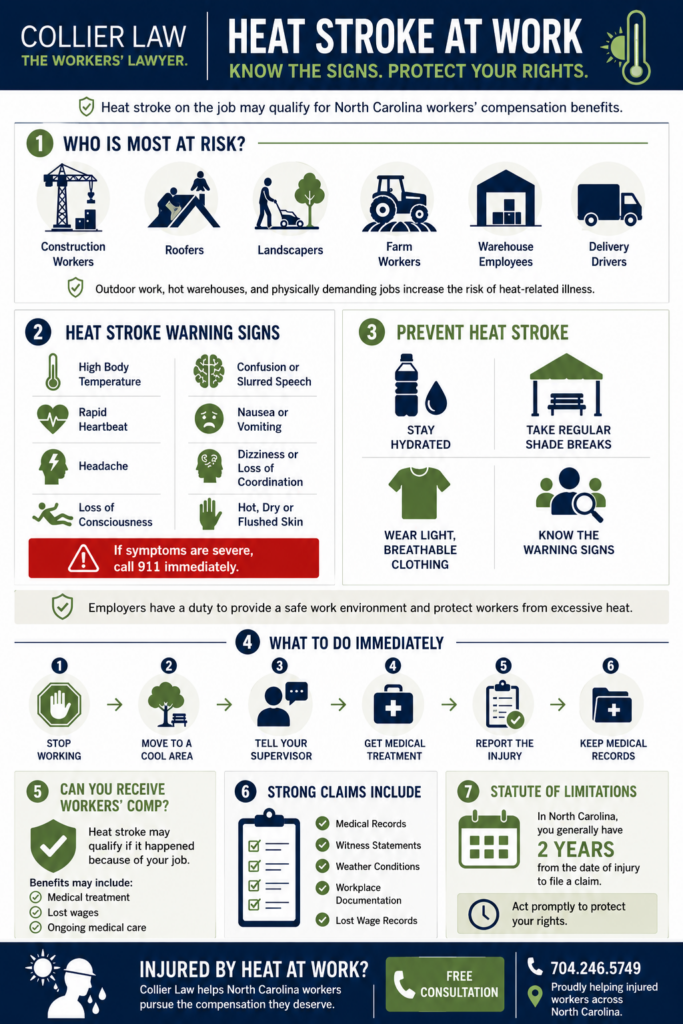
North Carolina summers bring extreme heat and high temperatures that can make outdoor and indoor work dangerous. Construction workers, landscapers, farm workers, roofers, and delivery drivers face daily heat exposure with little relief. Warehouse employees, factory workers, and kitchen staff also face heat stress when air conditioning is limited or unavailable. These conditions create an increased risk of heat exhaustion, heat stroke, and other heat-related illnesses. Employers have a duty to provide a safe work environment. This includes policies and procedures designed to prevent heat-related injury and protect workers from excessive heat.
If you have suffered heat stroke or another heat illness at work, Collier Law Workers’ Compensation Attorney is ready to fight for the compensation you deserve. Heat-related injuries can lead to significant medical bills and lost wages, and you should not have to cover these costs alone. Our team understands North Carolina workers’ compensation law and works to help injured workers get the benefits they are owed. Schedule a free consultation today to discuss your case with an experienced workers’ compensation attorney.
What Is Heat Stroke?
Heat stroke is a medical emergency. It happens when the body can no longer regulate its own temperature. A high body temperature, often above 103 degrees Fahrenheit, can cause damage to the brain, heart, kidneys, and muscles. Without prompt emergency treatment, heat stroke can be fatal. Recognizing the early warning signs is critical for preventing serious harm.
Common symptoms of heat stroke
- High body temperature
- Confusion or slurred speech
- Hot, dry, or flushed skin
- Rapid heartbeat
- Nausea or vomiting
- Headache
- Dizziness or loss of coordination
- Loss of consciousness
Heat exhaustion often comes before heat stroke. Symptoms of heat exhaustion include heavy sweating, weakness, cold or clammy skin, and muscle cramps. Recognizing these signs early can prevent a heat-related illness from becoming a medical emergency.
How Can I Avoid Heat Stroke While Working?
Preventing heat illness requires effort from both workers and employers. Workplace safety standards place responsibility on employers to reduce heat exposure risks on the job.
Stay Hydrated
Drink water regularly throughout the shift, even without feeling thirsty. Employers should provide accessible drinking water at all times, especially during high temperatures.
Take Regular Breaks
Frequent rest breaks in shaded or air-conditioned areas help the body recover from heat stress. Employers should build these breaks into work schedules during extreme heat.
Wear Appropriate Clothing
Light, breathable clothing helps regulate body temperature. Employers may need to adjust dress codes during hot months.
Acclimatization
Workers new to hot environments need time to adjust. Employers should gradually increase workload and heat exposure for new or returning employees.
Training and Monitoring
Employers should train workers to recognize symptoms of heat exhaustion and heat stroke in themselves and coworkers. Supervisors should monitor employees for signs of distress, especially during heat waves.
What Should I Do If I Experience Heat Stroke at Work?
Heat stroke requires immediate action. Delaying treatment increases the risk of permanent injury or death.
- Stop working immediately and move to a cool or shaded area
- Notify a supervisor right away
- Seek medical attention or call 911 if symptoms are severe
- Remove excess clothing and try to cool down with water or ice if available
- Report the incident to your employer in writing
- Follow up with a medical provider for evaluation and treatment
- Keep copies of all medical records related to the incident
Acting quickly can reduce the severity of the injury and strengthen any workers’ compensation claim you may file later.
Can I File a Workers’ Compensation Claim for Heat Stroke?
Heat stroke and workers’ comp claims can be complicated, but North Carolina law generally allows injured workers to seek benefits for heat-related illnesses that occur on the job. To succeed, you must show that your heat stroke or heat exhaustion was caused by conditions at work, such as extreme heat, physical labor, or lack of proper cooling measures.
Statute of Limitations
In North Carolina, injured workers generally have two years from the date of the injury to file a workers’ compensation claim. Missing this deadline can prevent you from recovering benefits, so it is important to act promptly.
Evidence Needed
Strong evidence supports a successful claim. This may include:
- Medical records documenting the diagnosis and treatment
- Witness statements from coworkers
- Weather records showing high temperatures on the day of the incident
- Records of workplace conditions, such as lack of air conditioning or breaks
- Documentation of lost wages and medical bills
Other Legal Considerations
Employers or insurance companies may dispute claims by arguing the heat stroke was caused by a pre-existing condition or unrelated factors. Having clear documentation and prompt medical care can help counter these arguments. Claims involving other heat-related illnesses, such as heat exhaustion or heat cramps, may also qualify for workers’ compensation benefits depending on the circumstances.
Should I Hire a Workers’ Comp Lawyer?
Filing a workers’ compensation claim for heat stroke can involve disputes over causation, medical evidence, and benefit amounts. Hiring an experienced workers’ compensation attorney can make a significant difference in the outcome of your case.
Case Evaluation
An attorney can review the details of your heat-related injury and determine whether you have a strong claim for workers’ compensation benefits.
Gathering Evidence
Lawyers know what documentation is needed, including medical records, weather data, and witness statements, to build a strong case.
Handling Disputes
If an employer or insurance company denies your claim or disputes the severity of your injury, an attorney can challenge that decision and advocate for fair compensation.
Maximizing Benefits
An experienced attorney will work to make sure you receive benefits that cover medical bills, lost wages, and any long-term effects of your heat-related illness.
Why Should I Choose Collier Law Workers’ Compensation Attorney?
Collier Law Workers’ Compensation Attorney has experience helping North Carolina workers who have suffered heat stroke and other heat-related illnesses on the job. We understand the physical and financial toll these injuries can take, and we are committed to helping you recover the workers’ compensation benefits you deserve. Our team will handle the legal process so you can focus on your recovery.
If you or a loved one has experienced heat stroke or heat exhaustion at work, do not wait to get help. Schedule a free consultation with Collier Law Workers’ Compensation Attorney today to discuss your case and learn about your legal options.