Can I Appeal a Denied Workers’ Compensation Claim?
Getting hurt on the job is stressful enough on its own. Then comes the waiting. You file your workers’ compensation claim, gather medical records, and wait for a decision, hoping it will cover your medical treatment and lost wages. When that denial letter finally arrives, the frustration can feel overwhelming. Bills keep coming, you may still be unable to work, and now you are told the benefits you counted on will not be paid. The good news is that a denied workers’ comp claim is not the final word. North Carolina law gives injured workers a clear path to appeal, and many denied claims are successfully overturned.
Collier Law Workers’ Compensation Attorney has helped injured workers throughout North Carolina fight back against unfair claim denials. Our team understands how the North Carolina Industrial Commission handles appeals, and we know what insurance companies look for when they try to avoid paying benefits. If your workers’ compensation claim denial has left you searching for answers, we are ready to review your case and fight for the settlement you deserve. Schedule a free consultation today to find out how we can help.
Why Would My Workers’ Compensation Claim Be Denied?
Insurance companies deny workers’ comp claims for many reasons, and not all of them are valid. Understanding why your claim was denied is the first step toward building a strong appeal.
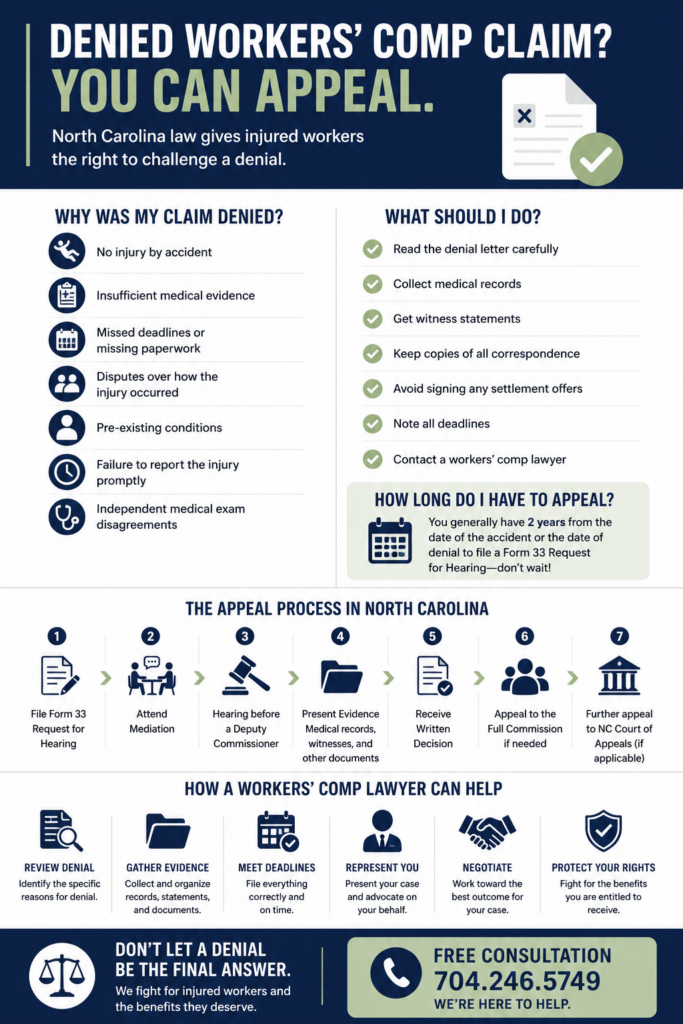
No Injury By Accident
The most common form of denial in North Carolina is due to “no injury by accident.” In North Carolina, there must be an accident or something unexpected that leads to the injury, such as a slip, trip, fall, stumble, etc. There is no requirement of an accident, however, with a back injury or a hernia. Reach out to discuss whether your incident qualifies as an injury by accident.
Insufficient Medical Evidence
One of the most common reasons for a denied claim is insufficient medical evidence. If your medical records do not clearly connect your injury to your job duties, the insurance company may argue there is not enough proof to support your claim.
Missed Deadlines
Workers’ compensation claims have strict filing deadlines. If a claim is submitted late, or if required paperwork is missing, an insurer may deny it on procedural grounds rather than reviewing the merits of the injury itself.
Disputes Over How the Injury Occurred
The insurance company denies many claims by disputing whether the injury actually happened at work. This is common when there were no witnesses present or when the injury developed gradually, such as with repetitive stress injuries.
Pre-Existing Conditions
If you had a prior injury or medical condition in the same body part, the insurer may claim your current symptoms are related to that old condition instead of your workplace accident.
Failure to Report the Injury Promptly
North Carolina law requires injured workers to report a workplace injury within a set time frame. A delay in reporting, even for a legitimate reason, can give the insurance company grounds to question the claim.
Independent Medical Examination Disagreements
Insurers sometimes require injured workers to attend an independent medical examination. If that doctor’s opinion conflicts with your treating physician’s findings, the claim may be denied based on that second opinion.
What Should I Do If My Workers’ Comp Claim Is Denied?
Receiving a denial letter can feel discouraging, but how you respond in the days that follow matters. Taking the right steps early can strengthen your position throughout the appeals process.
- Read the denial letter carefully to understand the specific reason given for the denial
- Collect all medical records related to your injury and ongoing treatment
- Gather witness statements from coworkers who saw the accident or know about your working conditions
- Keep copies of all correspondence with the insurance company
- Avoid signing any settlement offers before speaking with a workers’ compensation lawyer
- Note every deadline mentioned in the denial letter
- Contact an experienced workers’ compensation attorney as soon as possible
How Do I Appeal a Denied Workers’ Compensation Claim?
Appealing a denied workers’ compensation claim involves specific steps through the North Carolina Industrial Commission. Missing a step or a deadline can hurt your chances of overturning the denial.
File a Request for Hearing
The first step is filing a Form 33, Request for Hearing, with the North Carolina Industrial Commission. This formally begins the appeals process and puts the case in front of a Deputy Commissioner.
Gather Supporting Evidence
Strong evidence is essential to a successful appeal. This includes complete medical records, witness statements, employment records, and any documentation showing how the injury occurred and how it has affected your ability to work.
Attend Mediation
Many workers’ compensation claim disputes in North Carolina go through mediation before a hearing. This is an opportunity to potentially resolve the case without a full hearing in front of a Deputy Commissioner.
Present Your Case at a Hearing
If mediation does not resolve the dispute, the case moves to a hearing before a Deputy Commissioner. Both sides present evidence and testimony, and the Deputy Commissioner issues a written decision.
Appeal to the Full Commission if Necessary
If either party disagrees with the Deputy Commissioner’s decision, the case can be appealed to the Full Commission for further review. From there, further appeals can be made to the North Carolina Court of Appeals in certain circumstances.
How Long Do I Have To Appeal the Workers’ Compensation Denial?
Timing matters greatly in North Carolina workers’ compensation cases. After receiving a denial letter, injured workers generally have two years from the date of the accident or the date the claim was denied to file a Form 33 Request for Hearing with the North Carolina Industrial Commission, but this should be done almost immediately. Waiting too long can result in losing the right to appeal altogether.
Because deadlines can vary depending on the specific circumstances of your case, it is important not to assume you have unlimited time to act. Consulting with a workers’ compensation lawyer soon after a denial helps ensure that no deadlines are missed and that your appeal is filed correctly and on time.
What Is the Workers’ Comp Appeal Process?
The workers’ comp appeal process in North Carolina follows a structured path through the Industrial Commission. Knowing what to expect at each stage can help reduce some of the uncertainty.
- File a Form 33 Request for Hearing with the North Carolina Industrial Commission
- Participate in mandatory mediation with the insurance company
- Attend a hearing before a Deputy Commissioner if mediation does not resolve the dispute
- Present medical records, witness statements, and other evidence supporting your claim
- Receive a written opinion and award from the Deputy Commissioner
- File a further appeal to the Full Commission if either party disagrees with the ruling
- Pursue an appeal to the North Carolina Court of Appeals in limited circumstances

How Will a Workers’ Comp Lawyer Help Me?
Facing an insurance company alone during an appeal can be difficult, especially while recovering from an injury. A workers’ compensation lawyer handles the legal work so you can focus on your health.
Reviewing Your Denial Letter
An attorney will examine the specific reasons listed in your denial letter to determine the best strategy for your appeal.
Collecting and Organizing Evidence
Lawyers know what medical records, witness statements, and documentation the Industrial Commission needs to see to support your case.
Meeting Deadlines
Missing a filing deadline can end your appeal before it starts. A lawyer tracks every date and files all required paperwork on time.
Representing You at Hearings
An attorney presents your case before the Deputy Commissioner, questions witnesses, and argues on your behalf throughout the appeals process.
Negotiating with the Insurance Company
Legal representation often leads to better outcomes during settlement discussions, since insurance companies take represented claims more seriously.
Why Should I Choose Collier Law Workers’ Compensation Attorney?
If your workers’ comp claim was denied in North Carolina, you do not have to navigate the appeals process alone. Collier Law Workers’ Compensation Attorney has a track record of helping injured workers overturn denied claims and secure the workers’ compensation benefits they are owed. Our seasoned workers’ compensation attorney team understands the tactics insurance companies use to avoid paying valid claims, and we build strong appeals backed by solid medical evidence and thorough case preparation.
We know how stressful it is to deal with a denied claim while recovering from a workplace injury. That is why we handle the legal details so you can focus on getting better. From filing your Form 33 to representing you before the North Carolina Industrial Commission, we are with you at every stage of the appeals process.
Do not let a denial be the final answer. Contact Collier Law Workers’ Compensation Attorney today to schedule a free consultation and find out how we can help you appeal your denied workers’ compensation claim.